Follow the work. Understand the recorded cost.
Farm finance and operations in the same workspace as dairy and poultry production.
Keep sales, purchases, expenses, accounts, store, feed mixes and people records in Farm Yo. Review the business activity behind the milk and eggs, with the entries close enough to check.
The demo uses example data and requires access. Ask for a walkthrough of finance and operations.
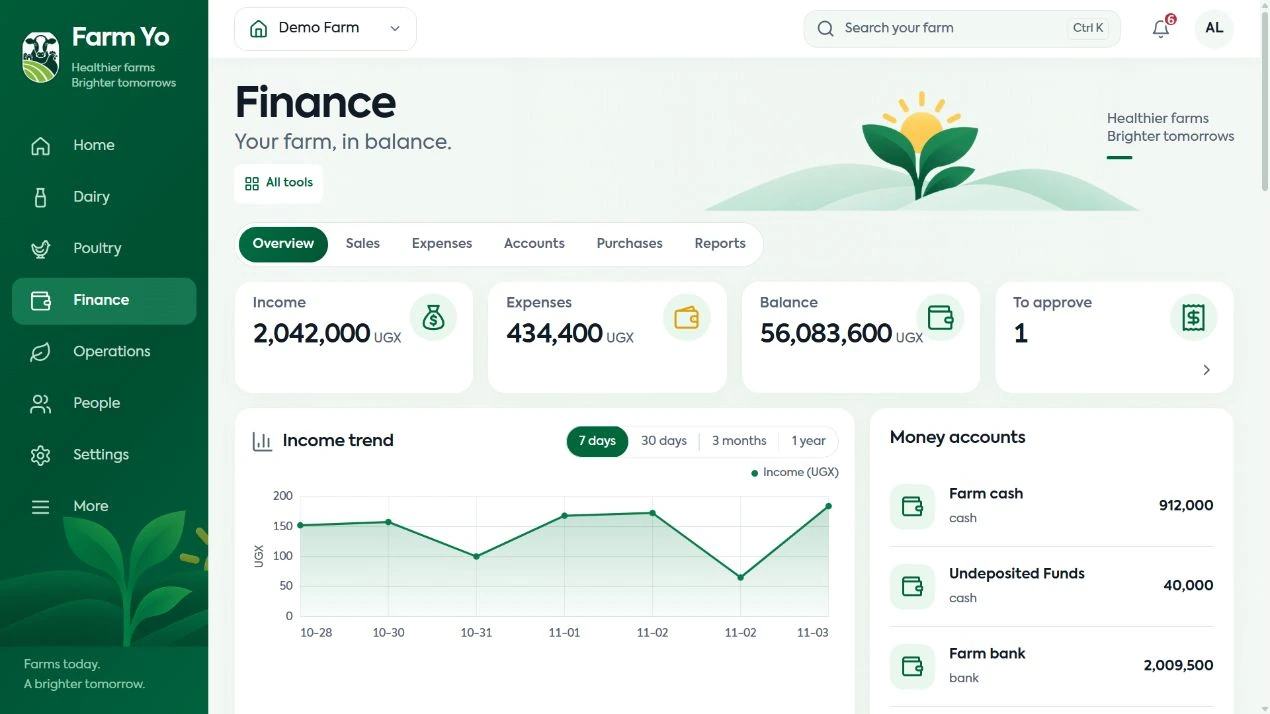
Keep a clear record of money in and out.
A production total is useful, but running the farm also means knowing what was sold, bought and spent. Farm Yo includes sales, purchases, expenses and accounts so the business record can sit beside daily production.
Enter values in UGX, keep the underlying details current and agree who checks them. A recorded total is a starting point for review; its usefulness depends on the entries your team maintains.
Four records to keep in view
- Sales: the farm's recorded selling activity.
- Purchases: inputs and other recorded purchases.
- Expenses: the spending recorded by the team.
- Accounts: the account records used in your farm setup.
Follow an input through the farm.
Purchase, store, feed and reports form a useful review sequence. These are Farm Yo record areas; the sequence below is suggested operating guidance, not a claim that every step happens automatically.
Purchase
Keep the purchase record and the details needed to review the input. Check that the item, quantity and cost match what the farm received.
Store
Maintain stock records and review them against a physical count. Consistent item names and units make the store record easier for the whole team to interpret.
Feed
Use feeding and feed-mix records for the relevant dairy or poultry activity. Keep quantities consistent so the recorded use can be discussed alongside production.
Reports
Review the recorded production and business activity. Return to the individual entries when a total needs explaining, then agree the next action with the team.
Put business records beside production.
| Farm activity | Production context | Business context |
|---|---|---|
| Dairy | Milk worksheets, animal history, feeding and care records. | Recorded sales, purchases, expenses, accounts and stock activity. |
| Poultry | Egg collections or weights, flock history, feeding, health and mortality. | Recorded sales, purchases, expenses, accounts and stock activity. |
| Combined farm | The relevant dairy and poultry record areas. | A shared review of the farm's business and operational records. |
Ask which period and which records a report covers before drawing a conclusion. Farm Yo helps you keep the information together. Your team checks completeness, explains the context and makes financial decisions with its advisers.
A shared workspace needs a shared routine.
People records belong alongside the work. Decide who enters purchases, who maintains store activity and who reviews expenses. Keep that responsibility clear when one person covers several jobs or when staff hand over a shift.
Begin with the records you already use. Bring a recent purchase, an expense sheet, your stock list and the production records to a walkthrough. The team can discuss how those activities fit a Farm Yo setup.
Before the first review
- Agree the opening records and review period.
- Use consistent item names and units.
- Check entries with the person who did the work.
- Keep source documents for your own verification.
These are general record-keeping practices to adapt to your farm.
Finance and operations questions
Does Farm Yo include store and feed records?
Yes. Store, feeding and feed mixes are part of the shared operational record areas. They sit alongside dairy and poultry activity, sales, purchases, expenses, accounts, people and reports.
Are finance records a live banking connection?
This page describes farm record keeping. It does not promise a live bank or mobile-money integration. Discuss your payment and reconciliation routine with the team before choosing a setup.
How is a combined dairy and poultry setup priced?
Starter and Growth are priced per module. Starter is UGX 70,000 per month per module or UGX 700,000 per year per module. Review the plans and capacity limits, then confirm the scope and user needs of your farm with Coregrid.
Can I request a guided demonstration?
Yes. Contact the team with the business and production records you want to discuss. The online demo remains access controlled and uses example farm data.
Bring the business behind your farm into view.
Start with a conversation about the records you keep today and the routine you want your team to maintain.